
職業教育研究の世界的権威 ドイツ・ケルン大学マティアス・ピルツ教授が 長野市を訪れ、宮下清教授と本学、県庁、マルコメ(株)を訪問しました
東京・紀尾井町のドイツ日本研究所開催のセミナー(在日ドイツ商工会議所後援)講演で来日したドイツ・ケルン大学のマティアス・ピルツ教授(Prof. Dr Matthias Pilz)が、3月4日ケビン・マッスマン東京国際大学専任講師と長野市を訪れ、宮下清教授(グローバルマネジメント学部)の案内で視察や意見交換を行いました。ケルン大学は1388年創立と欧州最古の伝統とドイツ最大規模を誇る中世大学で、同大学の職業・経営教育研究所(The Institute for Vocational and Business Education at the University of Cologne)に所属するピルツ教授は、職業教育訓練(VET)分野で多くの優れた研究成果をあげている世界的な研究者です。
まずはマルコメ株式会社を訪問し、商品、採用、職種などの説明を受けた後、工場で味噌づくりを見学しました。マルコメはドイツでもよく知られるブランドであり、その有名な味噌メーカーの本社を訪問できることを楽しみにしていたそうです。
麹から発酵・熟成、充填・包装までの製品化プロセスから、高い品質と技術、作業者がいない生産工程の省力化に驚き、日本の伝統食と最新技術が融合する同社に大いに感銘を受けていました。関心のある育成や研修、海外販売の質疑も行われました。
本学ではキャリアセンターで大学の就職支援について説明を受けました。(詳細はコチラ)
その後、長野県庁を訪問し、教育委員会から職業高校の減少や就職状況、高校再編など県立高校の現状と課題についての説明を受けました。ピルツ教授からドイツでも高校再編が進んでおり、日本でどう実施され、教員や住民からの反対はないかとの質問がありました。ドイツでも同様な課題があり、共通の悩みを抱えていることで、教育委員会の方々は親近感を感じて会場の雰囲気は和らぎ、質疑も活発になりました。
ピルツ教授から、ドイツでは職業教育と学校教育がデュアルシステムで連携しており、高校生が在学中や卒業後に職業教育を受けることは一般的であることを伺い、高校普通科から大学進学志向が強い日本との相違が浮き彫りになりました。ピルツ、マッスマン両先生もドイツで高校卒業後、2~3年は職業学校のデュアルシステムで学校と企業を行き来して学んできたそうです。
今回の長野訪問はとても充実したもので、素晴らしかったとの感想を頂き、宮下教授も県庁、高校、企業など関係先を回り、準備してきた甲斐があったようです。ご協力を頂いた関係先の皆様に感謝申し上げると共に、ピルツ教授の「教育と雇用間の移行に関する研究」(Transition research between education and employment systems)の成果が皆様に理解され、今後の展望につながる成果を頂いたことと思います。
まずはマルコメ株式会社を訪問し、商品、採用、職種などの説明を受けた後、工場で味噌づくりを見学しました。マルコメはドイツでもよく知られるブランドであり、その有名な味噌メーカーの本社を訪問できることを楽しみにしていたそうです。
麹から発酵・熟成、充填・包装までの製品化プロセスから、高い品質と技術、作業者がいない生産工程の省力化に驚き、日本の伝統食と最新技術が融合する同社に大いに感銘を受けていました。関心のある育成や研修、海外販売の質疑も行われました。
本学ではキャリアセンターで大学の就職支援について説明を受けました。(詳細はコチラ)
その後、長野県庁を訪問し、教育委員会から職業高校の減少や就職状況、高校再編など県立高校の現状と課題についての説明を受けました。ピルツ教授からドイツでも高校再編が進んでおり、日本でどう実施され、教員や住民からの反対はないかとの質問がありました。ドイツでも同様な課題があり、共通の悩みを抱えていることで、教育委員会の方々は親近感を感じて会場の雰囲気は和らぎ、質疑も活発になりました。
ピルツ教授から、ドイツでは職業教育と学校教育がデュアルシステムで連携しており、高校生が在学中や卒業後に職業教育を受けることは一般的であることを伺い、高校普通科から大学進学志向が強い日本との相違が浮き彫りになりました。ピルツ、マッスマン両先生もドイツで高校卒業後、2~3年は職業学校のデュアルシステムで学校と企業を行き来して学んできたそうです。
今回の長野訪問はとても充実したもので、素晴らしかったとの感想を頂き、宮下教授も県庁、高校、企業など関係先を回り、準備してきた甲斐があったようです。ご協力を頂いた関係先の皆様に感謝申し上げると共に、ピルツ教授の「教育と雇用間の移行に関する研究」(Transition research between education and employment systems)の成果が皆様に理解され、今後の展望につながる成果を頂いたことと思います。
(英訳)
Professor Matthias Pilz of the University of Cologne, Germany, a world-renowned authority on vocational education research, visited Nagano City and, together with Professor Kiyoshi Miyashita, visited our university, the prefectural government, and Marukome Co., Ltd.
Professor Matthias Pilz of the University of Cologne, Germany, who was in Japan to give a lecture at a seminar hosted by the German Institute for Japanese Studies in Kioicho, Tokyo (sponsored by the German Chamber of Commerce and Industry in Japan), visited Nagano City on March 4th with Kevin Massmann, Assistant Professor at Tokyo International University. They toured the city and exchanged opinions, guided by Professor Kiyoshi Miyashita (Faculty of Global Management). The University of Cologne, founded in 1388, is the oldest medieval university in Europe and the largest in Germany. Professor Pilz, who belongs to the Institute for Vocational and Business Education at the university, is a world-renowned researcher who has produced many outstanding research results in the field of vocational education and training (VET).
First, they visited Marukome Co., Ltd., where they received a briefing on the company’s products, recruitment and job roles, before touring the factory to observe the miso-making process. Marukome is a well-known brand in Germany too, and the German visitors had been looking forward to visiting the headquarters of this renowned miso manufacturer.
They were amazed by the production process—from koji fermentation and maturation to filling and packaging—as well as the high quality, advanced technology and labor-saving production lines that operate without human intervention. They were deeply impressed by the company’s fusion of traditional Japanese cuisine with cutting-edge technology. Questions were also raised regarding training and development programs, as well as overseas sales.
At our university, they received an explanation of the university’s career support services at the Career Centre. (Click here for details)
We then visited the Nagano Prefectural Government Office, where the Board of Education briefed us on the current situation and challenges facing prefectural high schools, including the decline in vocational high schools, employment prospects and high school restructuring. Professor Pilz said that high school reforms are also underway in Germany, and asked how they are being implemented in Japan, as well as whether there is any opposition from teachers or local residents. As Germany faces similar challenges and shares these concerns, the members of the Board of Education felt a sense of kinship, which helped to ease the atmosphere in the room and led to a lively question-and-answer session.
Professor Piltz explained that in Germany, vocational education and school education are integrated in a dual system, and it is common for high school students to receive vocational training while enrolled or after graduation. This highlighted the difference between Japan, where there is a strong emphasis on going from general high school education to university. Professors Pilz and Massmann both mentioned that, after graduating from secondary school in Germany, they spent two to three years learning through the dual system at vocational colleges, alternating between school and work placements.
We received positive feedback that this visit to Nagano was very fulfilling and wonderful, and it seems that Professor Miyashita's preparations, including visits to the prefectural government, high schools, and companies, were well worth it. We would like to express our gratitude to all those who cooperated, and we believe that the results of Professor Pilz's "Transition research between education and employment systems" were well understood and will lead to future prospects.
Professor Matthias Pilz of the University of Cologne, Germany, a world-renowned authority on vocational education research, visited Nagano City and, together with Professor Kiyoshi Miyashita, visited our university, the prefectural government, and Marukome Co., Ltd.
Professor Matthias Pilz of the University of Cologne, Germany, who was in Japan to give a lecture at a seminar hosted by the German Institute for Japanese Studies in Kioicho, Tokyo (sponsored by the German Chamber of Commerce and Industry in Japan), visited Nagano City on March 4th with Kevin Massmann, Assistant Professor at Tokyo International University. They toured the city and exchanged opinions, guided by Professor Kiyoshi Miyashita (Faculty of Global Management). The University of Cologne, founded in 1388, is the oldest medieval university in Europe and the largest in Germany. Professor Pilz, who belongs to the Institute for Vocational and Business Education at the university, is a world-renowned researcher who has produced many outstanding research results in the field of vocational education and training (VET).
First, they visited Marukome Co., Ltd., where they received a briefing on the company’s products, recruitment and job roles, before touring the factory to observe the miso-making process. Marukome is a well-known brand in Germany too, and the German visitors had been looking forward to visiting the headquarters of this renowned miso manufacturer.
They were amazed by the production process—from koji fermentation and maturation to filling and packaging—as well as the high quality, advanced technology and labor-saving production lines that operate without human intervention. They were deeply impressed by the company’s fusion of traditional Japanese cuisine with cutting-edge technology. Questions were also raised regarding training and development programs, as well as overseas sales.
At our university, they received an explanation of the university’s career support services at the Career Centre. (Click here for details)
We then visited the Nagano Prefectural Government Office, where the Board of Education briefed us on the current situation and challenges facing prefectural high schools, including the decline in vocational high schools, employment prospects and high school restructuring. Professor Pilz said that high school reforms are also underway in Germany, and asked how they are being implemented in Japan, as well as whether there is any opposition from teachers or local residents. As Germany faces similar challenges and shares these concerns, the members of the Board of Education felt a sense of kinship, which helped to ease the atmosphere in the room and led to a lively question-and-answer session.
Professor Piltz explained that in Germany, vocational education and school education are integrated in a dual system, and it is common for high school students to receive vocational training while enrolled or after graduation. This highlighted the difference between Japan, where there is a strong emphasis on going from general high school education to university. Professors Pilz and Massmann both mentioned that, after graduating from secondary school in Germany, they spent two to three years learning through the dual system at vocational colleges, alternating between school and work placements.
We received positive feedback that this visit to Nagano was very fulfilling and wonderful, and it seems that Professor Miyashita's preparations, including visits to the prefectural government, high schools, and companies, were well worth it. We would like to express our gratitude to all those who cooperated, and we believe that the results of Professor Pilz's "Transition research between education and employment systems" were well understood and will lead to future prospects.
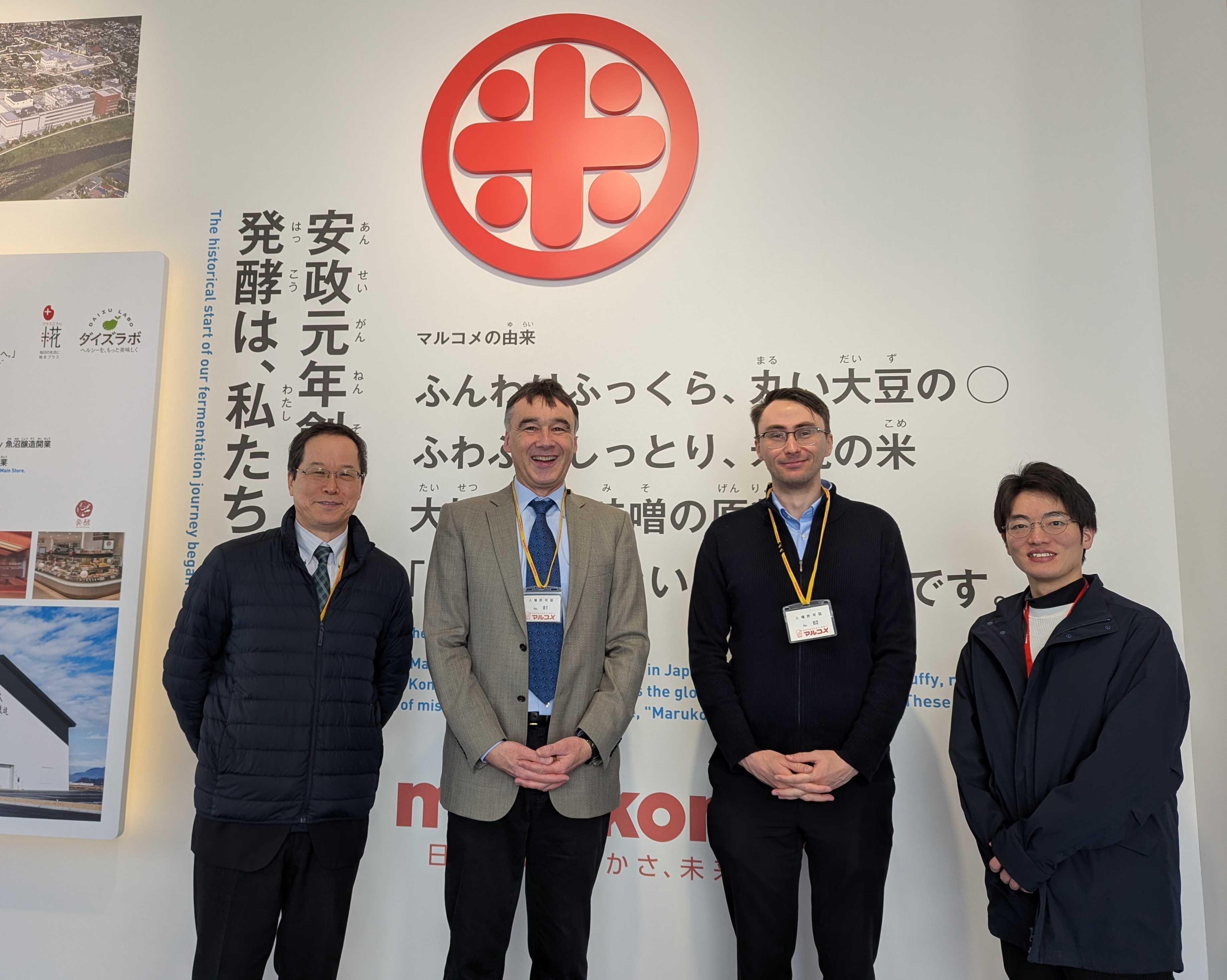
マルコメ 工場見学コースにて
左から宮下 清教授、マティアス・ピルツ教授、ケビン・マッスマン専任講師、マルコメ担当者
At the Marukome factory tour:
From left: Professor Kiyoshi Miyashita, Professor Matthias Pilz, Assistant Professor Kevin Massmann, and a Marukome representative.
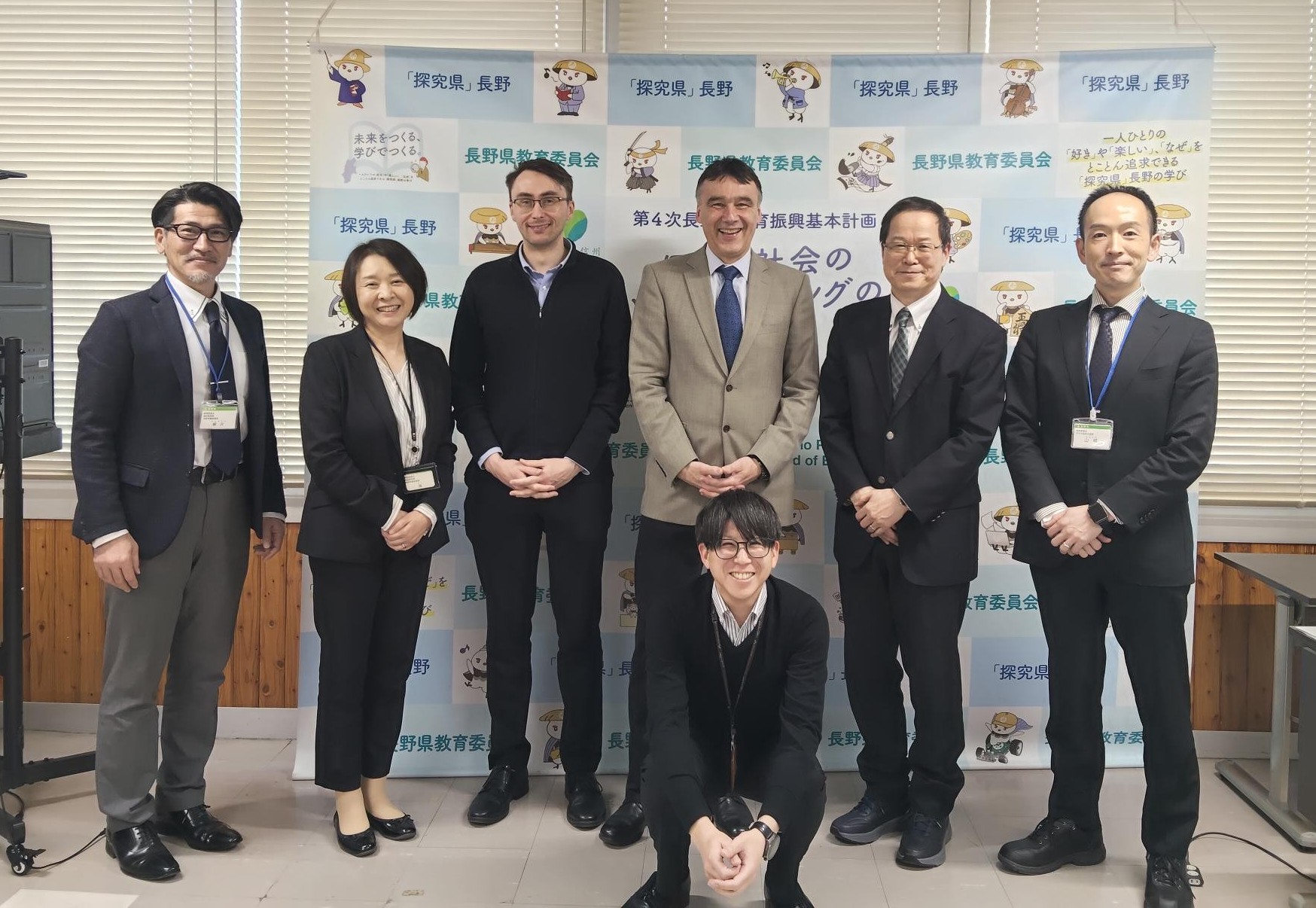
長野県庁 教育委員会にて
At the Nagano Prefectural Government Education Board